Burnout Is Real
Posted: March 26, 2025
As a public school teacher, graduate student, and mom, I know burnout all too well. I also know that when we get burned out, we feel less capable, and when we feel less capable, we can get really down on ourselves. But while it is something to learn more about and make changes around, it is not something to feel shame over. In our various roles, we are often confronted with circumstances beyond our control – we have too much to do and too little time to do it. We hold ourselves to high expectations, sometimes impossible to meet.
We often feel that we are not validated for our efforts and contributions. All of these factors can contribute to burnout. And burnout can be debilitating. So how can we respond to it? First, through understanding what it is. Psychologists and others have worked to define burnout as follows:
According to the World Health Organization (WHO), Burnout refers to a syndrome that results from chronic workplace stress that has not been successfully managed. It is typically characterized by three components:
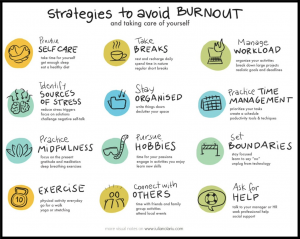 Depending on what your stressors are, you may need to invest more into self-care and self-connection. You may need to set clear boundaries with family, colleagues, and even your own children. You may need to find ways to manage your time or stress more effectively. The point is that burnout is unique to each individual. To help yourself, you have to identify the factors that are contributing to your own burnout and then start with a few small steps to relieve your burden.
Therapy is a wonderful place to do that work! Remember that you are not alone: a counselor can help you to unpack your own situation and find the best ways to respond to it and rediscover your best self.
Depending on what your stressors are, you may need to invest more into self-care and self-connection. You may need to set clear boundaries with family, colleagues, and even your own children. You may need to find ways to manage your time or stress more effectively. The point is that burnout is unique to each individual. To help yourself, you have to identify the factors that are contributing to your own burnout and then start with a few small steps to relieve your burden.
Therapy is a wonderful place to do that work! Remember that you are not alone: a counselor can help you to unpack your own situation and find the best ways to respond to it and rediscover your best self.
- Emotional Exhaustion: This might feel like exhaustion, overwhelm, and a sense that you just cannot keep going on doing all that you do. Often, for me, this manifested in angry, irritable outbursts that I couldn’t quite Now, looking back on this, I recognize that it was because I was too tapped out from all of my caregiving roles to make any time to sit with myself and identify what I was truly feeling. My emotional battery was spent.
- Depersonalization: This often manifests itself in cynicism, pessimism, or In the workplace, this cynicism can be toxic energy when it impacts your daily thoughts, feelings, and actions. It can be infectious, too. In parenting, dissociation may be more common. This might lead to a caregiver checking out or scrolling on their phone, even when they truly want to be present with their children.
- Decreased Sense of Accomplishment: This last symptom is when we feel that we are no longer good at one of our roles. As a teacher, there were seasons when I was not as confident in my abilities and had a lower degree of self-efficacy. As a mom, I am prone to self-doubt and self-criticism: Am I making the right choices for my children in regards to discipline? diet? sleep? The list goes on and on.
- Confronting fear and maintaining optimism
- Seeking and accepting social support
- Relying on an inner moral compass/embracing spirituality and/or religion
- Accepting what cannot be changed
- Creating meaning and opportunity from adversity
- Accepting responsibility for our own personal and emotional well-being